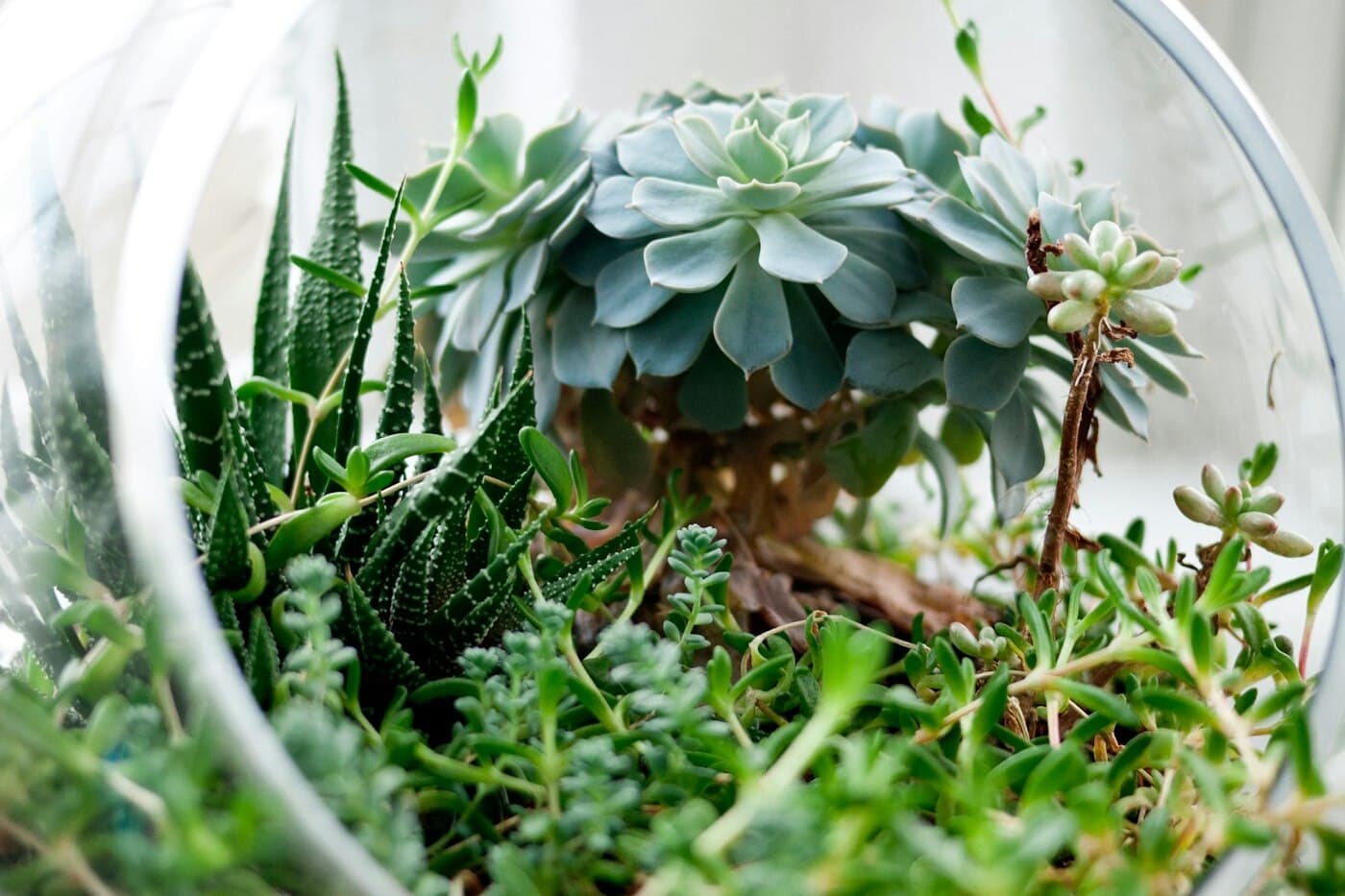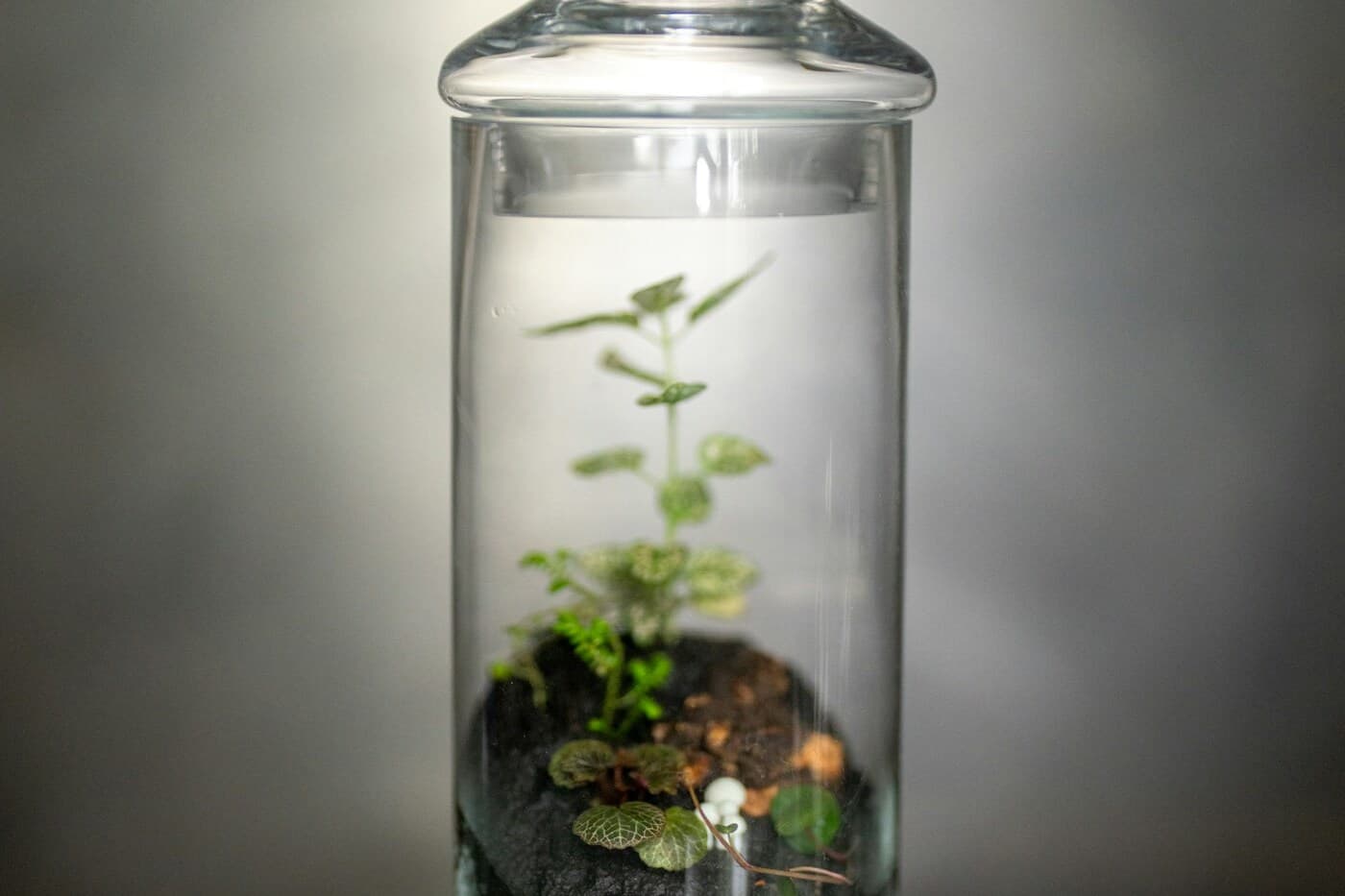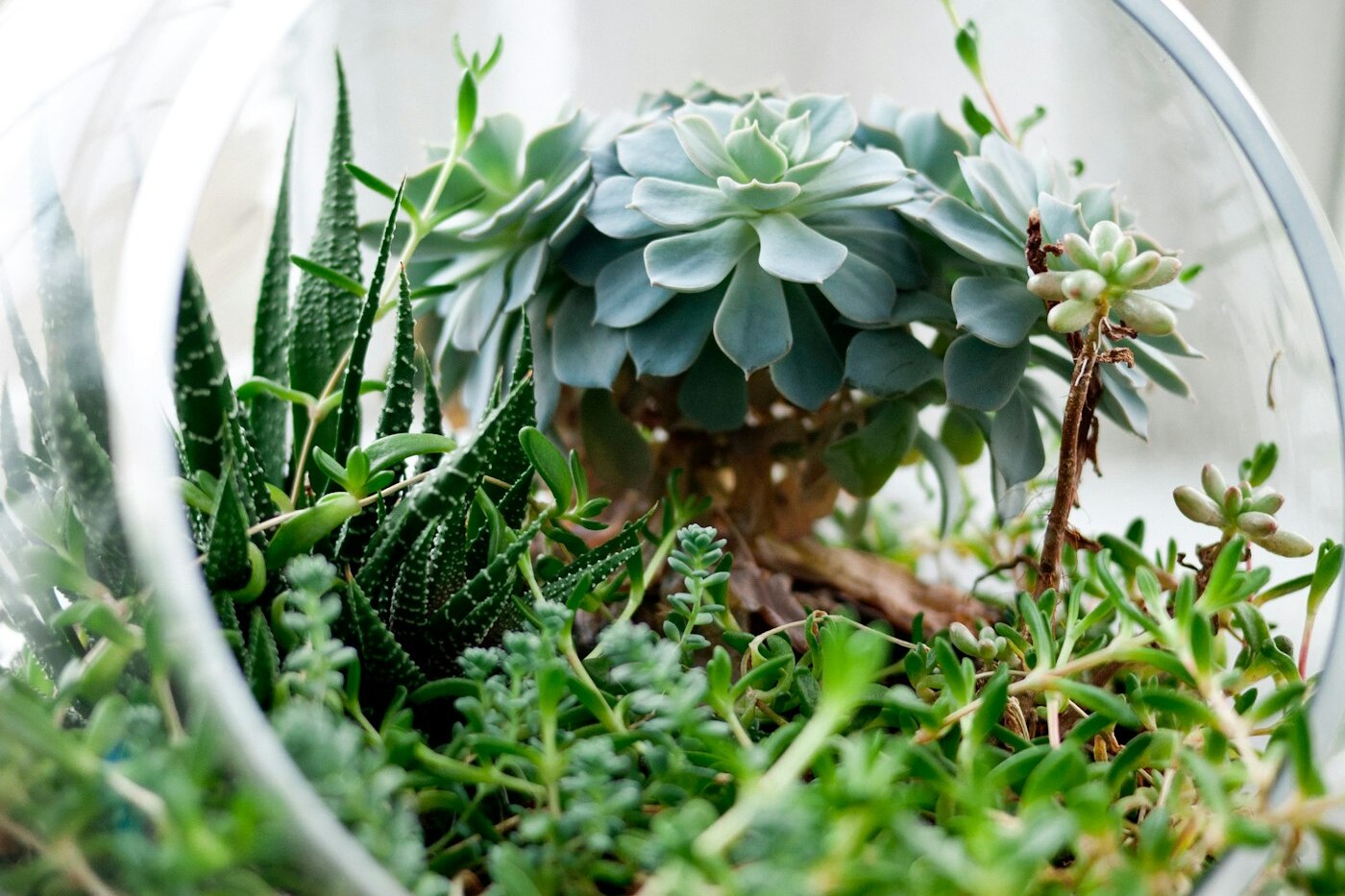
A terrarium is a miniature planted environment, often inside glass. In closed systems, water evaporates, condenses, and returns to the substrate — a small weather cycle.
Open systems behave more like stylish planters: they need regular watering and airflow-loving plants.
Under Glass focuses on helping you understand that cycle first, then choose plants, substrate, and fauna that fit.
Define it simply
Think of a terrarium as a designed microclimate. The vessel shape, lid, substrate, and plant list decide whether moisture recycles or escapes.
What success looks like
Healthy colour, gentle morning condensation that clears, and growth that stays in scale with the vessel.
Materials mindset
Clean glass, a sensible mix, compatible plants, and optional springtails beat expensive rare specimens on day one.
Aftercare
Observe for a week before major changes. Adjust water in teaspoons, not cupfuls.
Troubleshooting
Opaque fog for days means excess water or low light. Brown moss usually means dryness or harsh sun — not a need to rebuild everything.
Steps
- Notice the glass — Is there a lid? That choice changes humidity, plant lists, and care. Why: openness is the master climate switch.
- Think in layers — Drainage ideas, substrate, plants, and optional cleanup fauna each play a role. Why: problems are easier to diagnose by layer.
- Start simple — One closed jar, a few compatible plants, and springtails beat a complicated first build. Why: fewer variables mean faster learning.