History
Nathaniel Ward & the closed case
A Wardian case was a wooden box with glass panels — a sealed (or nearly sealed) mini-greenhouse. Light could get in; soot, salt spray and drying winds largely stayed out. Water vapour condensed on the cool glass and ran back down, so plants could go a long time without watering. That closed water cycle under glass is the same idea behind many modern closed terrariums.
Under Glass is a beginner learning platform about terrariums and plant care under glass — not a shop for antique cases. Nathaniel Ward is the history of closed cases, not the brand.
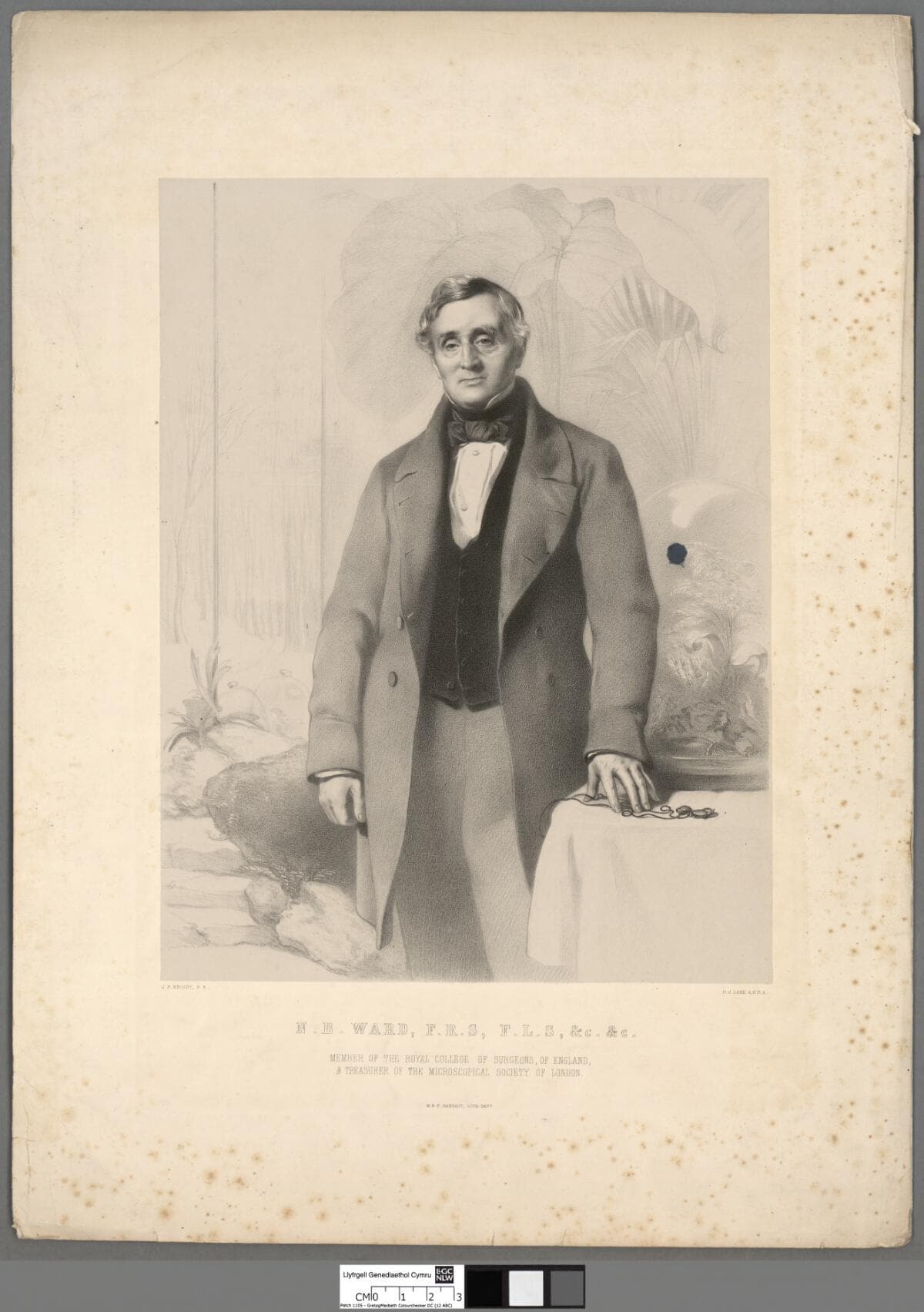
Richard James Lane, after John Prescott Knight, N. B. Ward, F.R.S., F.L.S., lithograph, 1859. National Library of Wales / Wikimedia Commons. Public domain. Source
At a glance
Key facts
- Lived
- Profession
- Observation
- Book
- Problems solved
Born in London; exact birth day is less securely documented than the death date.
MRCS; practised at Wellclose Square. Not a Kew employee.
Fern seedling in a sealed bottle with a moth chrysalis.
First edition 1842; illustrated second edition 1852.
Same closed water cycle idea as many modern terrariums.
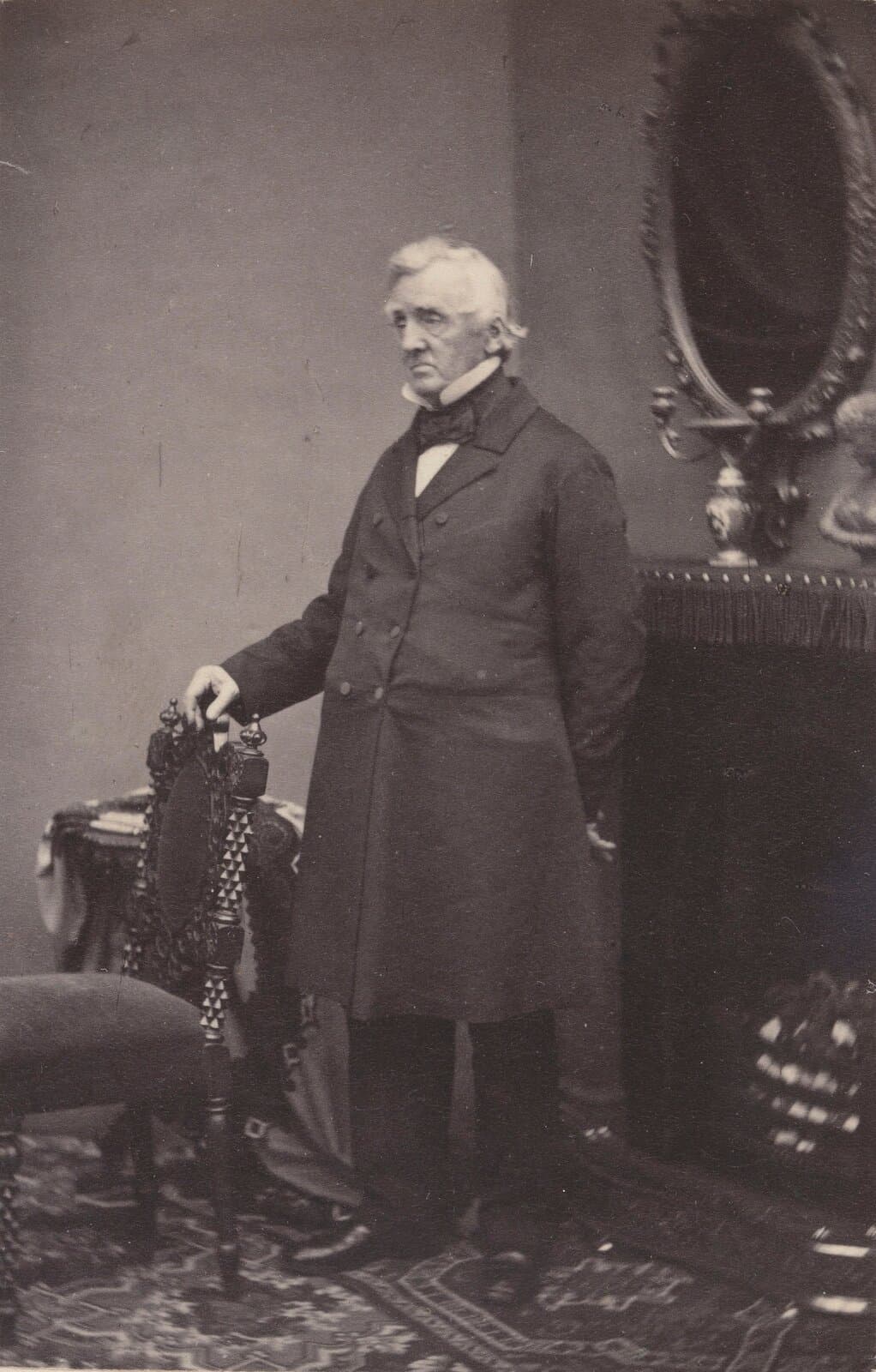
Photograph by Maull & Polyblank, London, c.1866. Via Wikimedia Commons (source noted as Royal Horticultural Society, Lindley Library). Public domain. Cross-check RHS record: https://collections.rhs.org.uk/view/272407/carte-de-visite-of-nathaniel-bagshaw-ward Source
Who he was
A busy East End doctor with a passion for plants
Nathaniel Bagshaw Ward was born in London in 1791 and died at St Leonards, Sussex, on 4 June 1868. He was a physician and surgeon (MRCS) who practised at Wellclose Square in the East End, later retiring to Clapham Rise. Botany was a serious amateur calling — not a Kew staff post — alongside interests in entomology and microscopy.
He became a Fellow of the Linnean Society (1817) and of the Royal Society (1852), examined botany for the Society of Apothecaries, and helped found the Microscopical Society in 1839. He corresponded with the Hookers at Kew; Kew later adopted glazed cases as standard shipping containers. He did not work for Kew.
The sealed bottle
A moth chrysalis, a fern, and dirty city air
In early nineteenth-century London, coal smoke and city dirt made outdoor and window fern culture difficult. Around 1829 — Kew and contemporary narratives prefer that year; some secondary summaries say “about 1830” — Ward kept a sphinx moth chrysalis in damp soil in a sealed bottle. A fern (and grass) seedling sprouted and survived: moisture condensed on the glass and returned to the soil. Plants reportedly persisted for years with little watering.
From that chance observation he built larger glazed cases for home and garden experiments at Wellclose Square. A closely glazed case kept dirt and fumes out while holding humidity in — so delicate ferns could thrive indoors.
secondary sources disagree slightly on dating the bottle observation strictly to 1829 versus “about 1830”. Prefer Kew, RHS, the Linnean Society and Ward’s 1842 book over viral retellings.
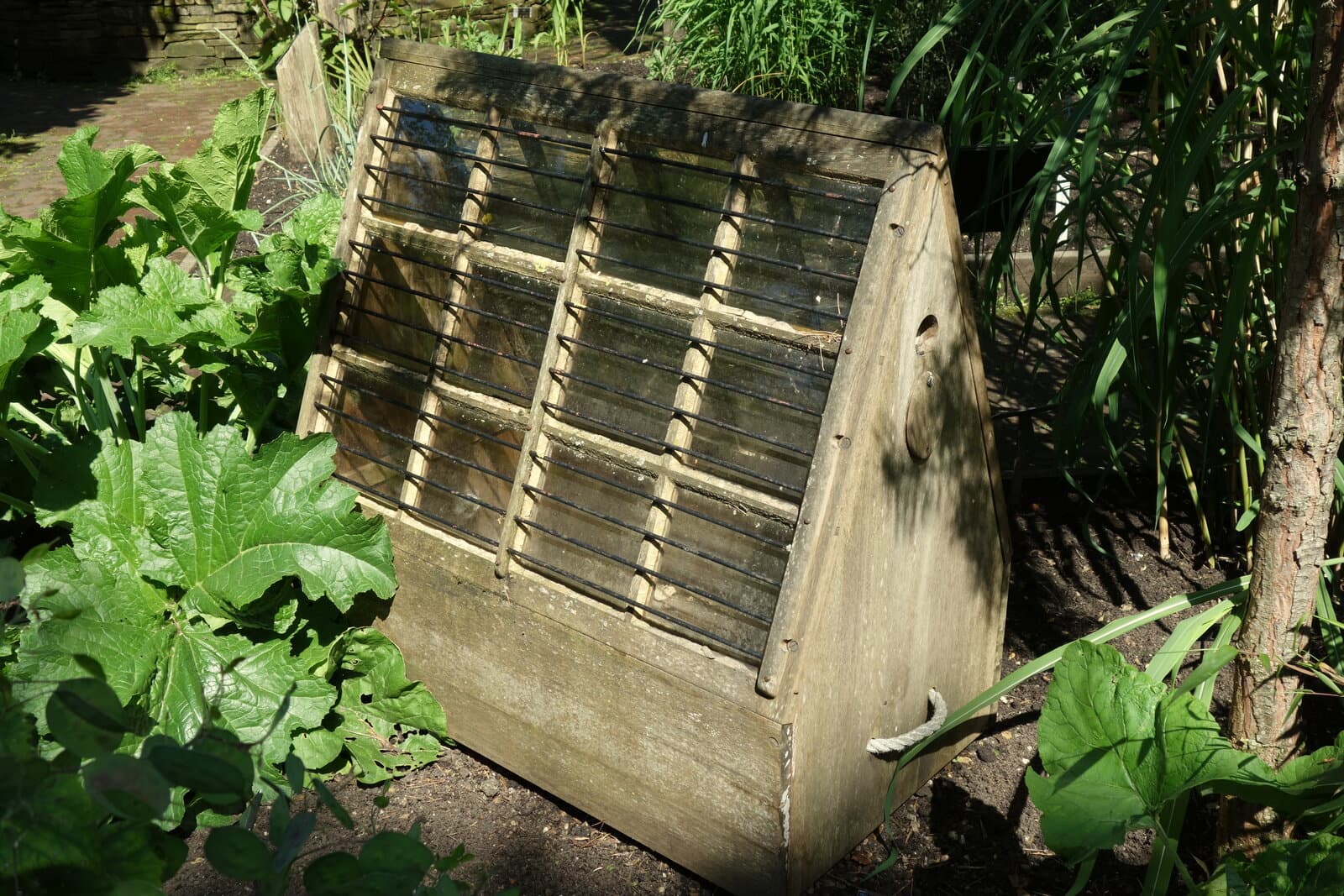
Photo by Daderot, Chelsea Physic Garden, 2024. Wikimedia Commons. CC0 1.0. (Caption on Commons links the exhibit to Ward’s 1829 design tradition — treat as museum display context, not a claim that this exact box is Ward’s 1829 prototype.) Source
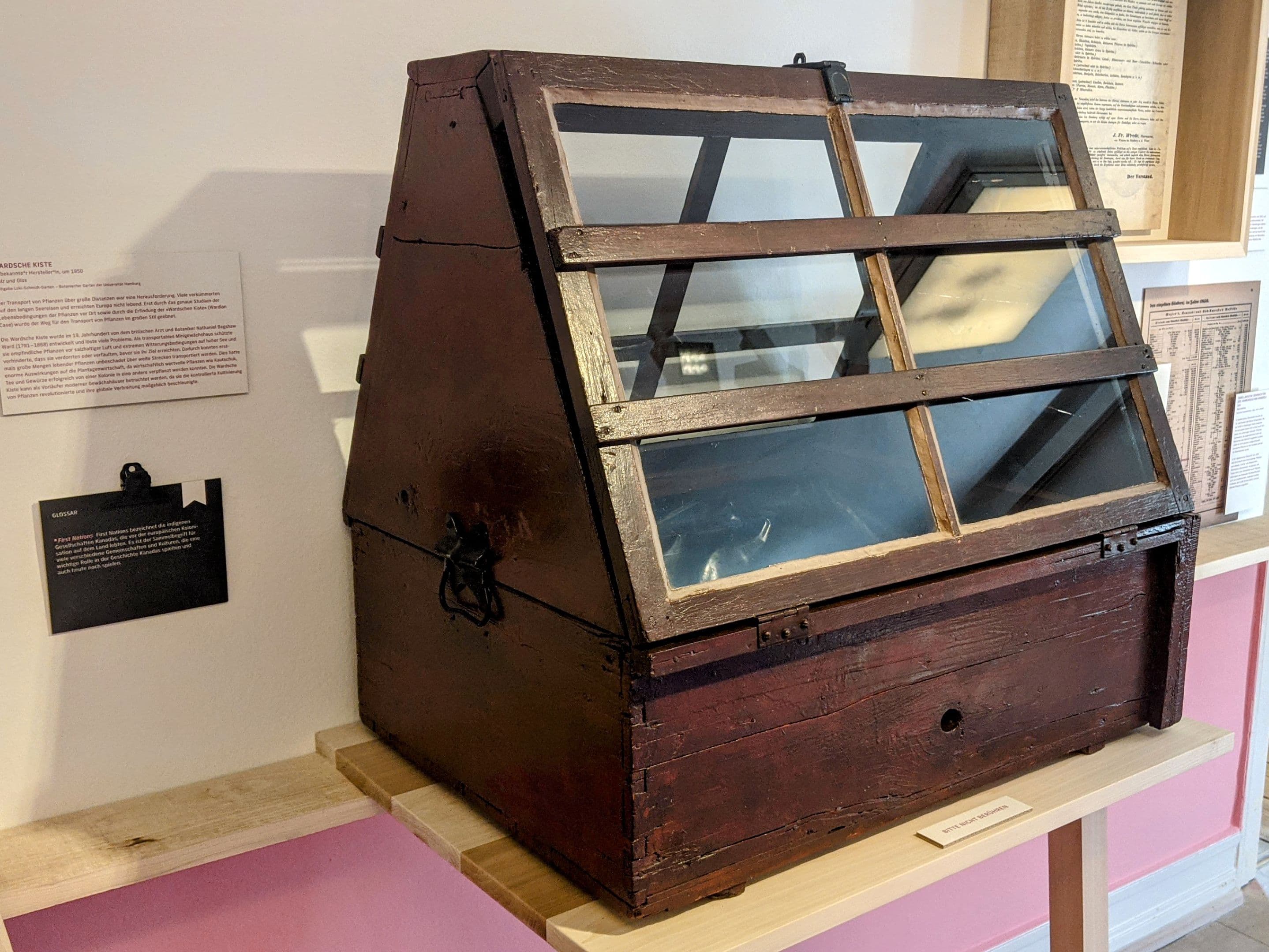
Photo by Uwe Rohwedder, 2026. Wardian case on loan from Botanischer Garten Hamburg for exhibition at Jenisch Haus, Hamburg. Wikimedia Commons. CC BY-SA 4.0. Source
At sea
Why sealed glass mattered on deck
Before sealed cases, live plants often died on long sea voyages — salt spray on deck; little light and care below. A glazed case could sit on deck, admit light, exclude salt, and recycle condensed moisture.
An 1833 sea trial sent ferns, mosses and grasses London–Sydney (and returned with Australian plants), showing high survival. Contemporary nurserymen contrasted this with earlier open-transit losses — vivid figures such as “nineteen out of twenty” lost appear in Loddiges-era and popular retellings. Treat those as period colour, not laboratory statistics.
Kew used Wardian cases regularly by about 1847 (a standard case often described as holding roughly 28 plants). The technology aided long-distance movement of economically important plants — tea, cinchona and rubber are often cited in Kew and historical literature. Kew’s last recorded use was 1962 (plants from Fiji); air freight and quarantine rules then made the boxes largely obsolete.
survival-rate anecdotes from nurserymen are vivid but not peer-reviewed data. Flag them; do not present inflated “95% vs 5%” claims as modern fact.
Publication & parlour ferns
From scientific box to drawing-room furniture
Ward published On the Growth of Plants in Closely Glazed Cases in 1842 (London: John Van Voorst), with an illustrated second edition in 1852. Early writers spoke of “closely glazed cases”; “Wardian case” became common from the 1840s. He popularised and demonstrated the principle widely; he did not patent a commercial monopoly.
Mid-century Victorians turned the idea into parlour furniture. Ferns under glass fitted the fern craze — Charles Kingsley coined “Pteridomania” in 1855. Fashionable cases could be plain or highly ornate. Transport crates and decorative fern cases shared a humid glazed principle; designs differed widely, so they should not be flattened into one product photo.
secondary literature notes that others (for example A. A. Maconochie) may have tried similar glazed plant cases earlier without publishing. Ward documented and spread the method brilliantly — present him as populariser and demonstrator, not as the sole absolute inventor without that nuance.
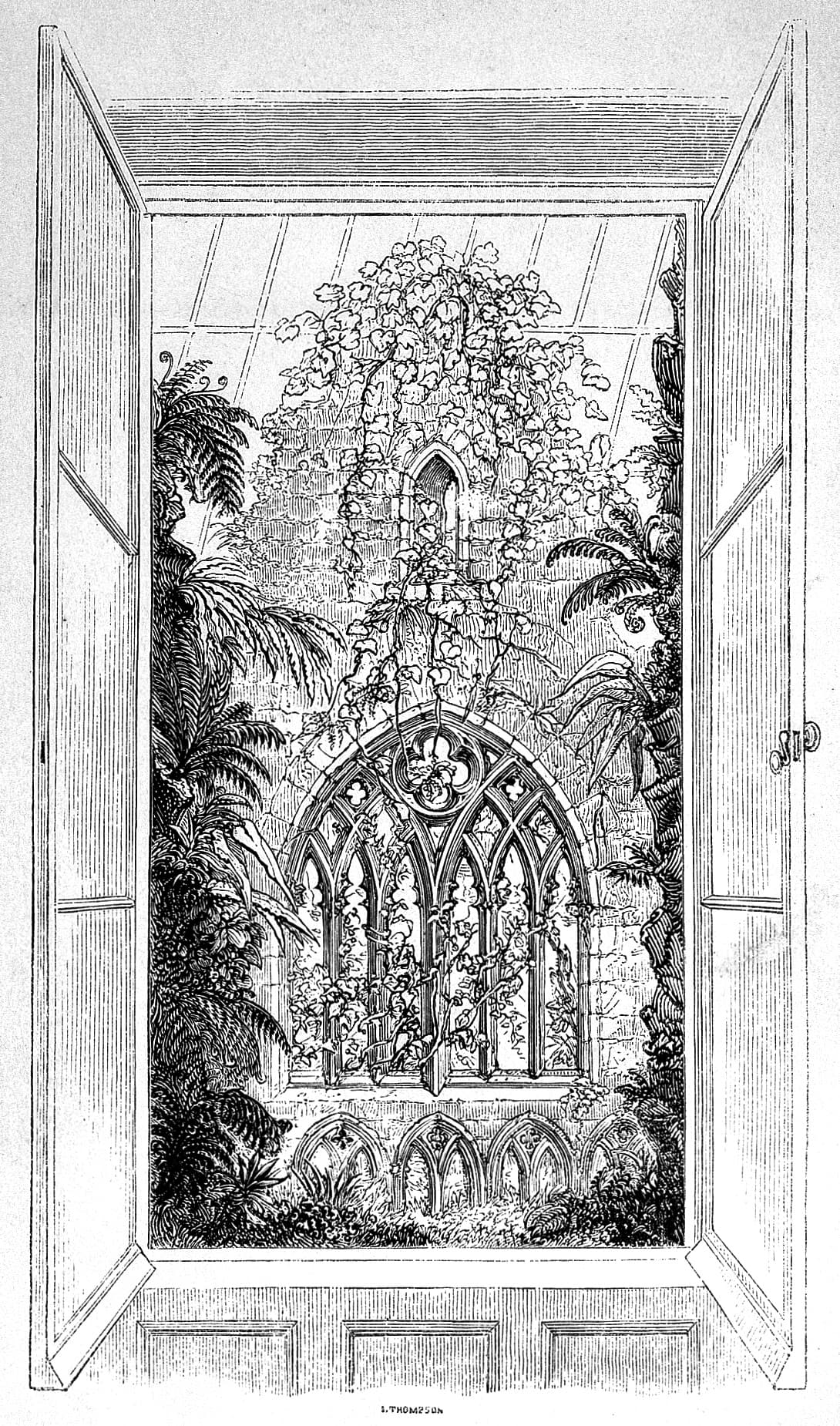
Plate from N. B. Ward, On the growth of plants in closely glazed cases (1852), “Tintern-abbey case”. Credit: Wellcome Collection. CC BY 4.0. Via Wikimedia Commons. Source
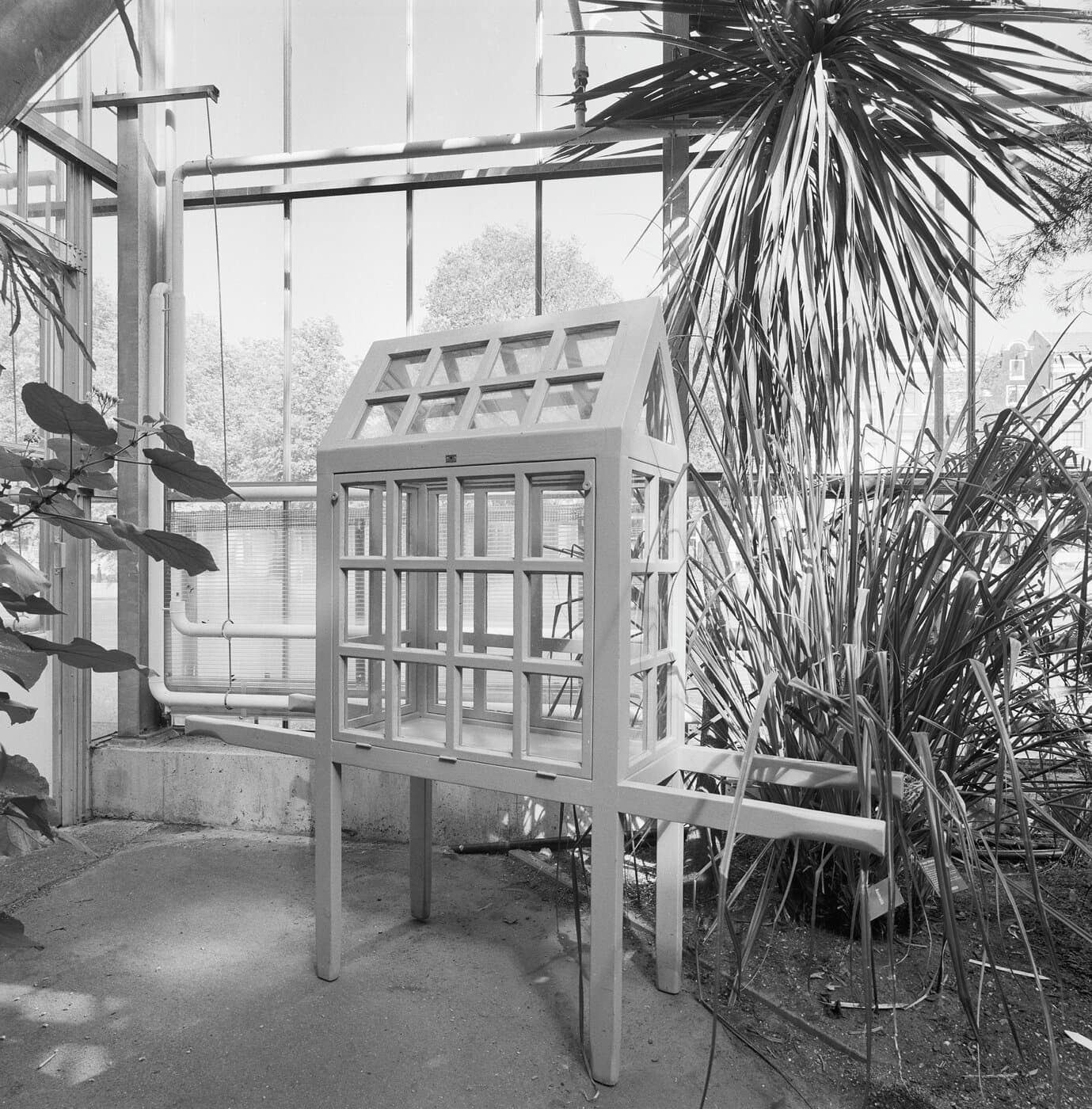
Photo by Gerard Dukker, June 2001. Provided by Rijksdienst voor het Cultureel Erfgoed. Wikimedia Commons. CC BY-SA 4.0. Attribution: Rijksdienst voor het Cultureel Erfgoed. Source
Today
What this means for a beginner terrarium
The historical lesson is practical, not mystical. A closed jar or tank can sustain moisture-loving plants with less watering because of condensation and recycling — if plant choice, light and sealing are right. Modern closed terrariums are descendants of that idea, not museum replicas.
Over-sell (“self-watering forever”, “no care needed”) is ahistorical and unhelpful. Ward’s cases still needed appropriate plants, light and sound construction, and shipping cases were adapted over time. Closed glass is not magic: leaks, rot and the wrong plants still matter.
If you want the craft side next, start with what a terrarium is, then closed versus open, or the calm Start Here pathway.
A well-made closed case is still a handmade craft — but this page is about the history and the water cycle, not buying furniture.
Sources
Prefer institutions over viral retellings
This page follows the site research brief drawn from Kew, RHS Lindley Collections, the Linnean Society, the Royal Society catalogue, the Dictionary of National Biography, Wellcome Collection, and related secondary essays. Wikipedia is useful only as a lead — verify elsewhere, including the Maconochie caveat above.